


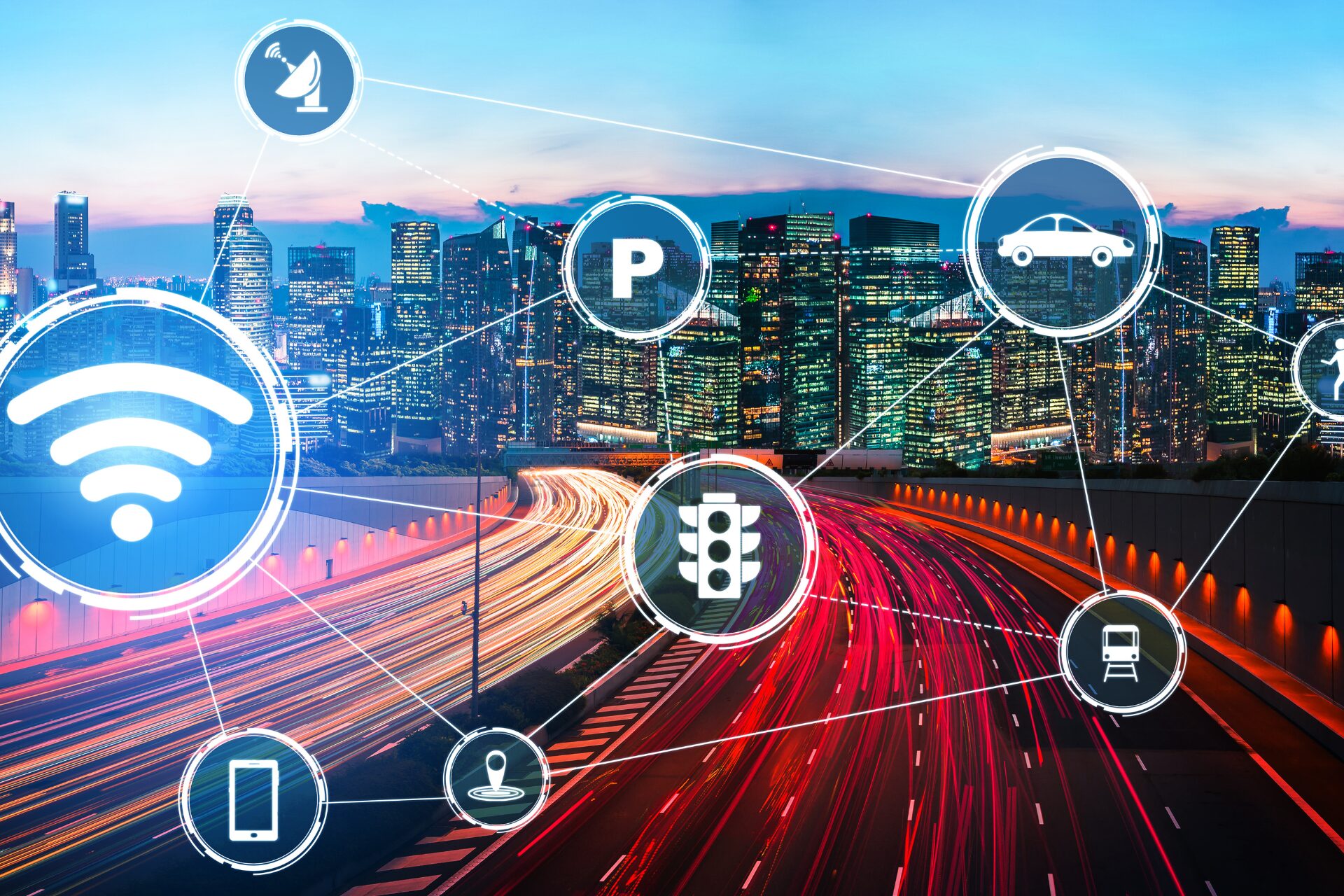
Build a resilient transportation technology stack for cities with this urban mobility framework that connects key systems. By combining intelligent transport and transportation management systems, this framework uses data to improve traffic flow and road networks, creating safer streets and more efficient communities.
Every vendor in the transportation market today claims to be “the” platform. For city leaders, this creates a fragmented landscape in which each department manages a different mix of systems.
Currently, nobody has a clear picture of what a well-orchestrated mobility stack looks like. While the goal of building smart cities is clear, the path to achieving it often feels cluttered.
This post presents a transportation technology stack not as a vendor pitch, but as a practical, intelligent mobility framework for evaluating what you have and what you’re missing.
Why a “Stack” Framework Helps
A layered smart city mobility architecture optimizes operations, communications, and procurement across city offices and transportation departments. It brings immediate benefits for urban transportation and strategic planning, namely:
- Shared vocabulary: It creates a common language between information technology departments and transit agencies, improving communication and reducing delays.
- Strategic procurement: You’re buying toward an architecture rather than a single product to solve a single problem.
- Exposing gaps: A framework highlights gaps that single vendor conversations often overlook.
| Separation of Concerns ➡ Shared Vocabulary ➡ Strategic Procurement ➡ Exposing Gaps |
Intelligent Transportation Systems Framework Guide
An optimized transportation technology stack involves five layers:
- Sensing and Detection
- Connectivity
- Analytique
- Operations
- Governance
Let’s break each down.
Layer 1: Sensing and Detection
The foundation of any transportation technology stack is the physical collection of raw data from city streets.
This layer is about visibility. High-quality sensing must go beyond vehicle counts to include multimodal coverage for pedestrians and cyclists in public spaces.
Effective roadside infrastructure now uses IoT (Internet of Things) sensors and advanced tools such as Miovision Scout Plus to monitor traffic flow. As autonomous vehicles and connected vehicles become more common, this layer must adapt to ensure safety for all road users.
Layer 2: Connectivity and Data Pipelines
Once data is collected, it must move.
This layer defines the mobility data pipeline that carries information from the street to decision makers. This requires robust digital technologies to manage the high volume of data generated by cities.
Reliable transport systems require standardized formats, so existing systems can communicate. Whether the goal is to reduce congestion or improve air quality, the speed of this pipeline determines how quickly you can respond to changing conditions.

Source de l'image : Pexels
Layer 3: Analytics and AI
This is where raw data becomes insight, which matters more than basic reports in smart cities.
Today, advanced analytics can identify many factors that affect urban mobility. AI and machine learning can predict traffic flow and safety risks, enabling proactive responses.
By studying past patterns and through continuous monitoring, smart tools help cities spot high-risk areas early, without relying on fatalities for data. This step supports environmental goals and improves residents’ quality of life.
Learn more: How Vision Zero Intelligent Mobility Shrinks Time-to-Safety
Layer 4: Operations
At the operations layer, insight becomes action.
This is the “control room” where transportation becomes orchestrated. The Miovision One platform integrates software offerings to simplify this existing process.
Key solutions include:
- Adaptive signal control: Dynamically adjusting traffic signals to optimize movement.
- Miovision Opticom: Providing Emergency Vehicle Preemption (EVP) to get first responders to scenes faster and Transit Signal Priority (TSP) to keep public transport on schedule.
- Integrated services: Managing fleet management as part of a broader mobility-as-a-service model.
Layer 5: Governance and Transparency
The final layer makes the system accountable and built to last.
Smart cities must run legacy systems while adding new tools. Strong data access controls protect sensitive information, and clear audit trails show who did what and when. These steps help maintain public trust.
Using the Framework: A Quick Self-Assessment
You can use these five layers as a diagnostic tool for your next service procurement.
First, assess your current infrastructure to identify areas that need improvement. Assign a maturity score from 1 (reactive) to 3 (optimized) for each layer.
- Reactive: Data is siloed, and actions are taken only after problems arise.
- Functional: Some integration exists, and data is used to inform periodic changes.
- Optimized: Data flows in real time across an integrated platform, allowing for proactive orchestration.
| Layer | Score 1: Reactive | Score 2: Functional | Score 3: Optimized |
| Sensing | Data is siloed and collected manually: actions are taken only after problems arise. | Basic automated counts exist: data is used to inform periodic timing changes. | Multimodal detection is continuous: providing real-time visibility for all road users. |
| Connectivity | Limited or no remote access: data must be collected physically from the field. | Some signals are connected, but latency prevents real-time data application. | High-speed, low-latency pipelines: data is available the moment it is generated. |
| Analytique | Simple reporting: the system only tracks what has already happened. | Pattern recognition: data is used to identify common congestion trends. | Predictive modeling: machine learning identifies safety risks before accidents occur. |
| Operations | Manual intervention: timing changes require site visits or lengthy approvals. | Basic preemption: transit and emergency vehicles receive some priority. | Proactive orchestration: Miovision One automates signals to reduce congestion. |
| Governance | No formal policy: data access is restricted, and vendor lock-in is high. | Standard procedures: data is shared internally but lacks public transparency. | Transparent and auditable: strategic planning is backed by clear, accessible data. |
Most cities find they’re strong in sensing but lack the analytics or governance needed for true efficiency. Once you’ve identified these gaps, you can then build a more resilient urban mobility strategy that uses data to lower emissions and improve safety.
FAQs About Smart Technology for Smart Cities
What’s a transportation technology stack?
It’s a framework with five layers: sensing, connectivity, analytics, operations, and governance. Cities use it to connect digital tools into one transport system. This system aims to improve safety and efficiency.
How do smart cities use traffic technologies to reduce traffic congestion?
Smart cities use adaptive signal control and IoT sensors to manage traffic in real time. This helps traffic flow better and reduces delays. It also reduces emissions and fuel use by cutting idling at signals.
Why is data transparency important in urban mobility?
Transparency makes transportation systems accountable. Open transport platforms and clear data access policies help. Cities can audit how systems work. This builds public trust.
What role does AI play in traffic management?
AI and machine learning processes large amounts of data to provide up-to-date details on road conditions. This helps transportation departments respond more quickly to incidents and predict future traffic bottlenecks.
Points clés à retenir
- Layered framework: A five-layer transport tech stack lets cities upgrade sensors without replacing the full management system.
- Multimodal visibility: Good urban mobility needs IoT sensors and roadside tools that detect pedestrians and cyclists, not only cars.
- Actionable analytics: Machine learning should do more than report data. It should give clear insights that help cut congestion.
- Operational orchestration: Tools like Miovision One and Miovision Opticom support transit and emergency response with real-time tracking.
Building Transportation Technology Stack One Layer at A Time
The stack doesn’t need to be built all at once. The value of this intelligent transport systems framework lies in knowing where you are and in making investments that build toward the whole.
[Read Part 1: Why Mobility Data Stays Stuck in Silos (and What That’s Breaking)]