
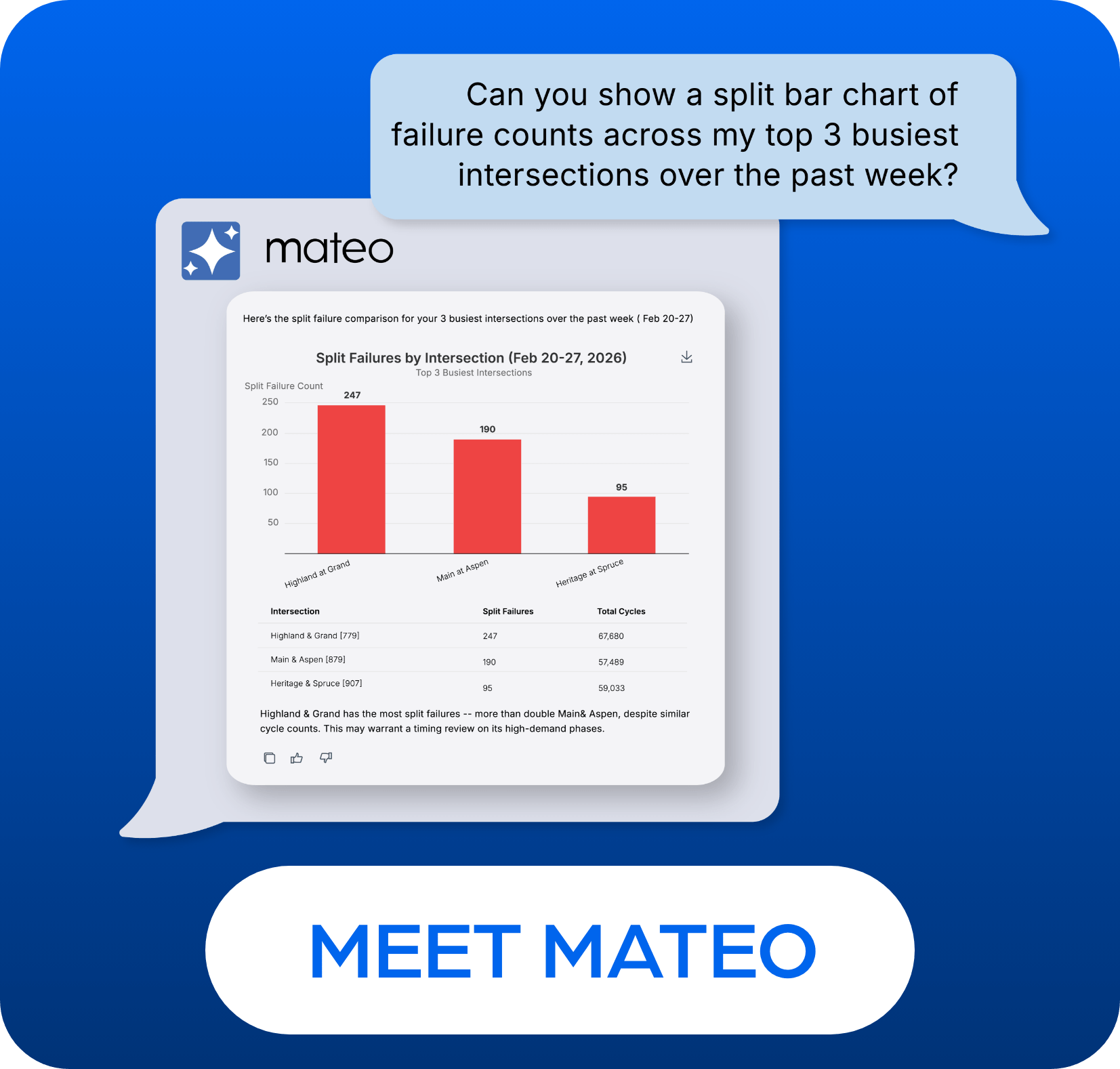

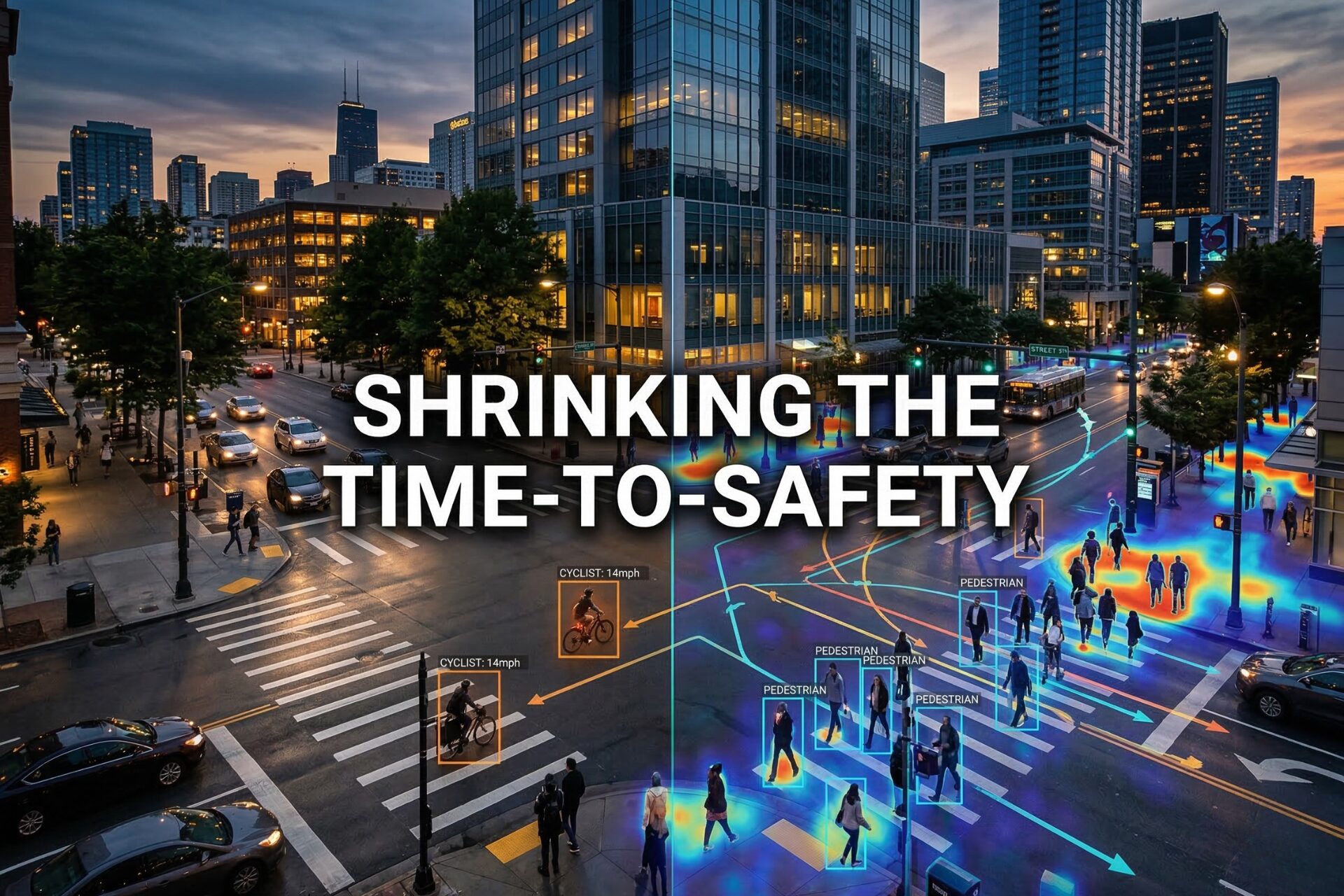
Achieve Vision Zero goals faster with intelligent mobility solutions. By leveraging traffic safety technology and artificial intelligence, cities can move from reactive studies to proactive road safety. Improve traffic safety and protect vulnerable road users today.
A death happens at an intersection with a known history. In the next few weeks, flowers and memorials will show up. Then, months later, the city orders an official traffic review. Another six months pass before a recommendation finally reaches a desk, where it may sit until the next budget cycle or the right political moment.
While the commitment to Vision Zero is a pledge to end all traffic fatalities and serious injuries, the operational reality for many major American cities is a system that only learns from death after the fact.
The question facing today’s transportation leaders is not whether they care about road safety. It is whether their systems move fast enough to act on what they already know.
Why Traditional Safety Programs Stall
The disconnect between Vision Zero goals and actual outcomes often stems from a reactive data pipeline.
Currently, most Vision Zero implementations rely on historical crash data, which is a lagging indicator that requires someone to be harmed before the system identifies a problem. These studies produce recommendations that are frequently siloed. Collision data lives with police, signal data lives with traffic operations, and near-miss patterns often live nowhere.
Furthermore, city staff face competing priorities in traffic safety operations. There’s constant tension between safety improvements and the political pressure for vehicle throughput.
Programs are evaluated on crash counts, which can take years to be statistically validated; few leading indicators are available to justify proactive strategies in real time.
This measurement gap means that by the time a high-injury network is officially identified through a five-year study, the safety risks have already changed or intensified.
How Intelligent Mobility Supports Vision Zero
Vision Zero intelligent mobility represents a fundamental shift from reactive to proactive management.
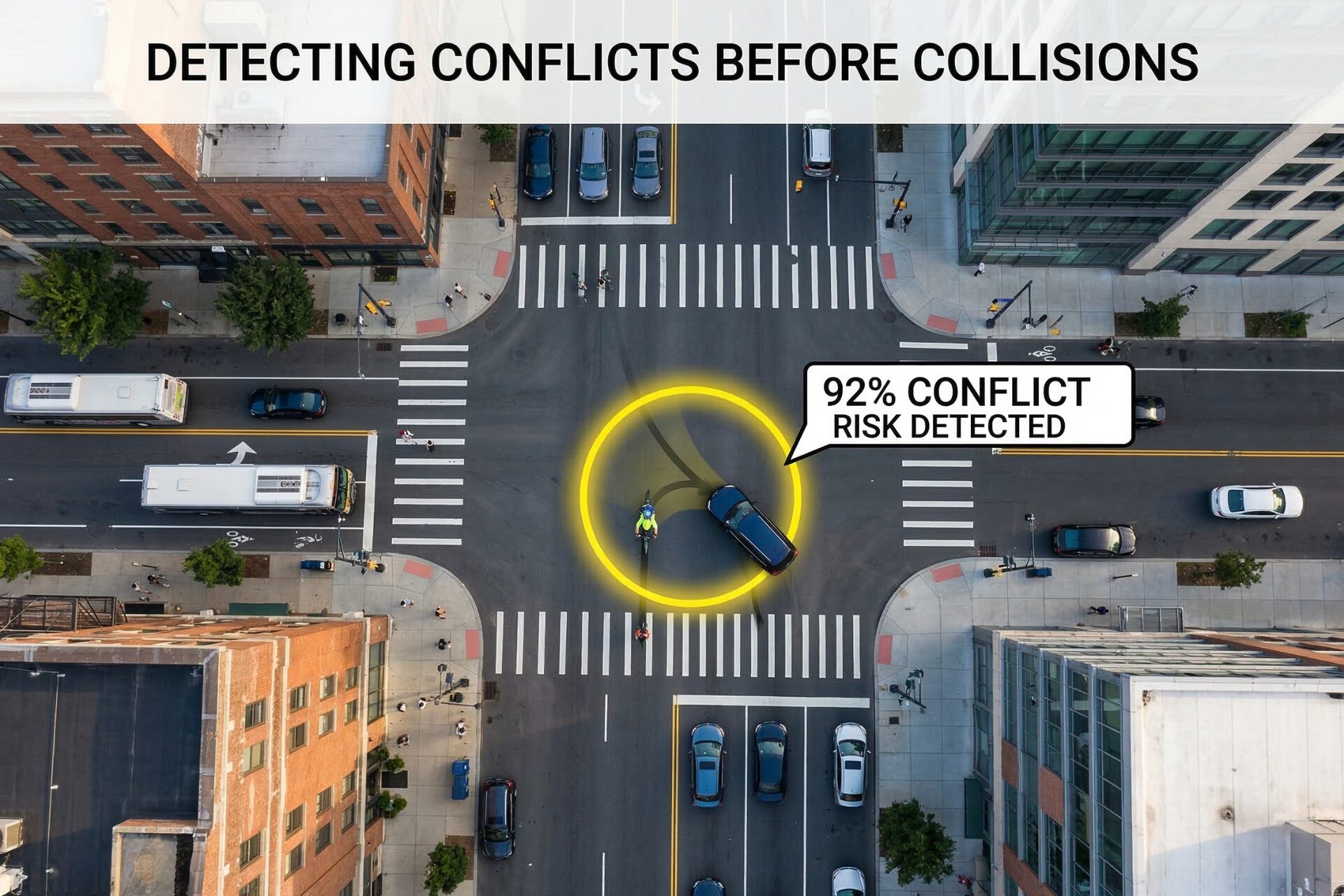
Instead of waiting for a tragedy to trigger a study, intelligent mobility technology provides continuous monitoring across the entire road network. This allows cities to identify potential conflicts at intersections with zero traffic deaths, but show dangerous patterns.
A core component of this shift is the safe system approach, which acknowledges that human error is inevitable and that road users shouldn’t pay for those errors with their lives. By using artificial intelligence and connected vehicles, systems can surface conflict events, such as a vehicle traveling too closely to vulnerable road users like cyclists or pedestrians.
This traffic data lets cities update high-injury network maps in real time. In practice, it supports proactive traffic operations, with signal phasing and safety‑critical timing refined weekly to improve safety outcomes.
Practical Examples: Vision Zero in Operation
What does this look like in real life? It looks like using pedestrian conflict detection to spot a risky left-turn pattern before anyone on foot is ever hit. It means adjusting signal timing and using Vision Zero data to confirm the improvement within weeks, not months.
These focused actions help cities boost road safety without the usual delays in planning and approvals.
Think about what Miovision Opticom can do for emergency response. It’s not only about faster response times. Emergency vehicle preemption can reduce the risk of first responder crashes at intersections, helping them arrive safely and on time.
This is an essential component of equitable mobility. By automatically surfacing high-risk corridors for monthly reviews, cities can move away from political escalation and toward a data-driven approach.
Bildquelle: Gemini 2026
Proving Progress: Leading Indicators and Transparency
One of the greatest Vision Zero operational challenges is maintaining public trust when traffic fatalities don’t drop immediately. Intelligent mobility enables a better measurement model for an adopted vision. Instead of just pointing to lower traffic deaths, cities can point to:
- Near-miss frequency: Documenting a reduction in vehicle-pedestrian potential conflicts at a specific crossing.
- Compliance metrics: Measuring improvements in speed management and pedestrian phase use.
These accountability metrics build community engagement and provide the political cover needed to implement bold safety changes for safe streets.
FAQs About Road Safety Action Plans
What’s the “Safe System Approach” in Vision Zero?
It’s a road safety strategy that acknowledges human error is inevitable. Instead of blaming road users, it focuses on designing infrastructure and using vehicle technology to prevent mistakes from leading to traffic fatalities.
Has near-miss detection proved successful at preventing traffic deaths?
Yes. By identifying potential conflicts as leading indicators, city staff can implement targeted interventions “to surface areas where conflicts are high and need to be addressed so crashes are less likely to occur,” says Lakshmi Sankaran, Senior Product Marketing Manager, ITS at Miovision.
What’s the benefit of Emergency Vehicle Preemption (EVP)?
EVP uses sensors to give emergency vehicles green lights, enabling them to navigate traffic signals more quickly. This improves emergency response times and significantly reduces the risk of accidents at intersections during critical calls.
Wichtige Erkenntnisse
- Move from reactive to proactive: Transition from waiting for crash data to using artificial intelligence for identifying real-time safety risks.
- Protect vulnerable road users: Prioritize them by detecting potential conflicts and near-misses before serious injuries occur.
- Data-driven accountability: Use Vision Zero intelligent mobility to generate continuous safety scores and Vision Zero accountability metrics for public transparency.
- Rapid Operational Iteration: Shrink time-to-safety by adjusting signal phasing and roadway design based on weekly traffic data rather than multi-year studies.
The Road Ahead
Vision Zero isn’t a planning problem: it’s an operational one.
The cities making meaningful progress are those that have closed the loop between data, decisions, and action. By shrinking the “time-to-safety” through Vision Zero intelligent mobility, we can ensure that our streets are designed for the living, not just studied for the dead. Let’s Move.