




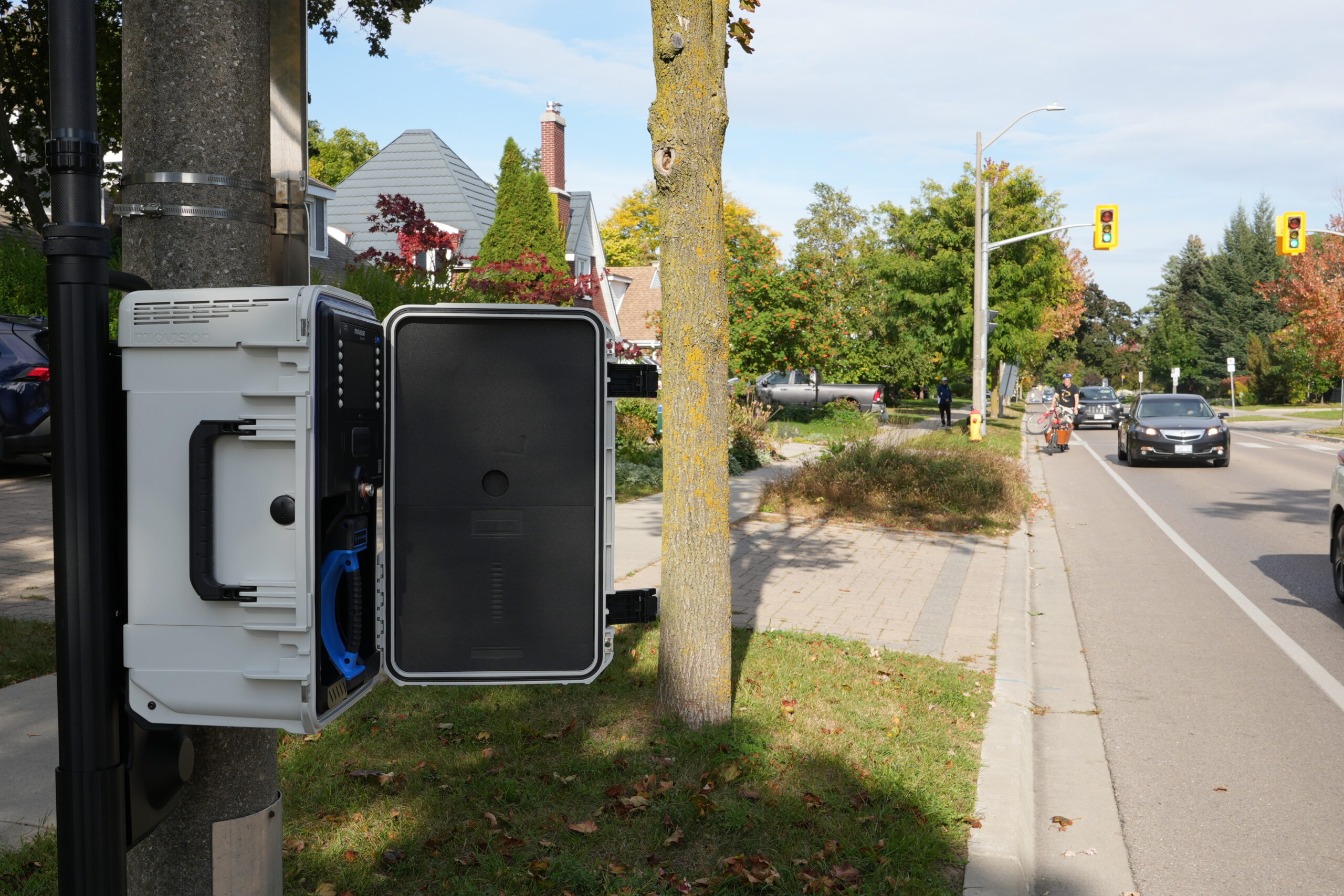
For traffic engineers, high-fidelity multimodal data is only as valuable as the speed with which it can be analyzed. While capturing detailed movements of motorists, pedestrians, and cyclists is critical for designing safer roadways, traditional data workflows often bottleneck at the processing stage, forcing teams to choose between massive file transfers and multi-day wait times. To eliminate this friction, Miovision is shifting high-performance analytics out of distant servers and directly onto the roadside, bringing edge-computing capabilities to the forefront of traffic data collection.
While video-based data collection has proven to be the most reliable and versatile solution, traditional processing architectures have sometimes involved long turnaround times. To overcome this, Miovision has fundamentally altered how video data is analyzed by introducing onboard processing capabilities for its Scout Plus and Scout Explore hardware platforms.
Edge Computing: Nvidia GPUs and Cellular Integration
At the core of this operational upgrade is a shift toward edge computing. The Scout Plus and Scout Explore devices are uniquely engineered with built-in Nvidia GPUs and cellular modems, enabling rigorously trained computer vision models to process traffic data directly on the device itself.
This localized hardware optimization eliminates the mandatory requirement for bandwidth-heavy video file uploads. Instead, the locally processed count data is transmitted over the air via a secured Amazon Web Services (AWS) cloud infrastructure. By doing the heavy computational lifting at the roadside, onboard processing reduces video data turnaround times from potentially days to near-immediate availability. Once the study is processed, reports can be downloaded in a matter of minutes. While video uploads are no longer strictly required to generate counts, agencies still retain the flexibility to save their video for observational analysis and ground-truth validation.
A Simplified Workflow Within Miovision One
To support these advanced edge capabilities, engineers use the upgraded Miovision One platform, an intelligent mobility platform that replaces legacy systems like TDO for accessing newer functionality. The workflow is highly streamlined: users select a recorded video, trim it to exact timeframes (such as a 24-hour window), and visually map out the desired counting areas and lane configurations right over a snapshot from the camera.
Crucially, the onboard architecture maintains a rigorous accuracy standard of 95% or higher, the exact same standard as traditional manual post-processing, with proper equipment deployment.
Advanced Study Configurations and Multimodal Classifications
The hardware currently supports two study types directly from the device:
- ATR (Automatic Traffic Recorder) studies: The onboard models can process bi-directional vehicle volume counts across up to four lanes of traffic. This capability includes vehicle speed capture and natively detects cyclists traveling alongside vehicles on the roadway. Engineers can also filter data using the full 13-bin FHWA vehicle classification scheme, alongside the standard 6-class scheme.
- Pedestrian and bike pathway studies: Available exclusively through the Miovision One platform, this localized study isolates active transportation volumes. Planners can draw custom zones to accurately measure pedestrian and bicycle traffic along dedicated bi-directional bike lanes, crosswalks, or multi-use pathways.
Operational Efficiency and Unlimited Scaling
Transitioning to edge processing not only accelerates study turnaround but introduces entirely new economic efficiencies. The significantly reduced reliance on back-end server processing has allowed Miovision to introduce unlimited onboard processing at a flat annual rate. Agencies can acquire separate unlimited licenses for ATR processing and pathway processing, or hold both concurrently, allowing them to scale their data collection affordably without tracking hourly processing fees.
From an operational standpoint, deploying these tools remains highly efficient for field technicians. Battery life depends on the processing mode:
| Processing mode | One battery | Three batteries |
|---|---|---|
| Onboard processing | Up to 3 days | Up to 9 days |
| Standard upload processing | Up to 5 days | Up to 15 days |
By equipping traffic engineers with high-fidelity, multimodal data and drastically reducing processing times, Miovision’s onboard processing empowers cities to become highly informed, agile decision-makers ready to design the safe, efficient complete streets of the future.