
Key Takeaways
- Data-driven efficiency: A smart city traffic management system leverages real-time data and data analytics to solve complex traffic challenges.
- Integrated platforms: Combining ATMS with the Miovision One platform improves traffic flow and provides traffic managers with actionable insights.
- Enhanced safety: Smart traffic solutions prioritize road safety by using sensors and traffic cameras to reduce traffic accidents for all road users.
- Urban sustainability: Optimizing traffic signal timing reduces traffic congestion and lowers emissions, contributing to the development of green cities.
A smart city traffic management system leverages real-time data and smart traffic management to reduce congestion and improve road safety. By optimizing traffic flow, cities create sustainable, future-proof transportation networks through smart technology.
The concept of a smart city is no longer a futuristic ambition reserved for science fiction. Across the globe, urban centers are leveraging technology and data collection to improve the quality of life, sustainability, and overall efficiency.
At the center of this shift is a key tool: a smart city traffic management system. As cities grow and streets get more complex, safe and smooth travel matters more. Moving people and goods well is now a core measure of city success.
Smart city traffic management is not just about timing lights or counting cars. It’s about creating a cohesive, data-driven ecosystem where every intersection contributes to a larger picture of urban health.
By reducing emissions, minimizing congestion, and prioritizing safety, this intelligent transportation system helps forward-minded cities become easier to navigate for everyone, driving progress one change at a time.
What is a Smart City Traffic Management System?
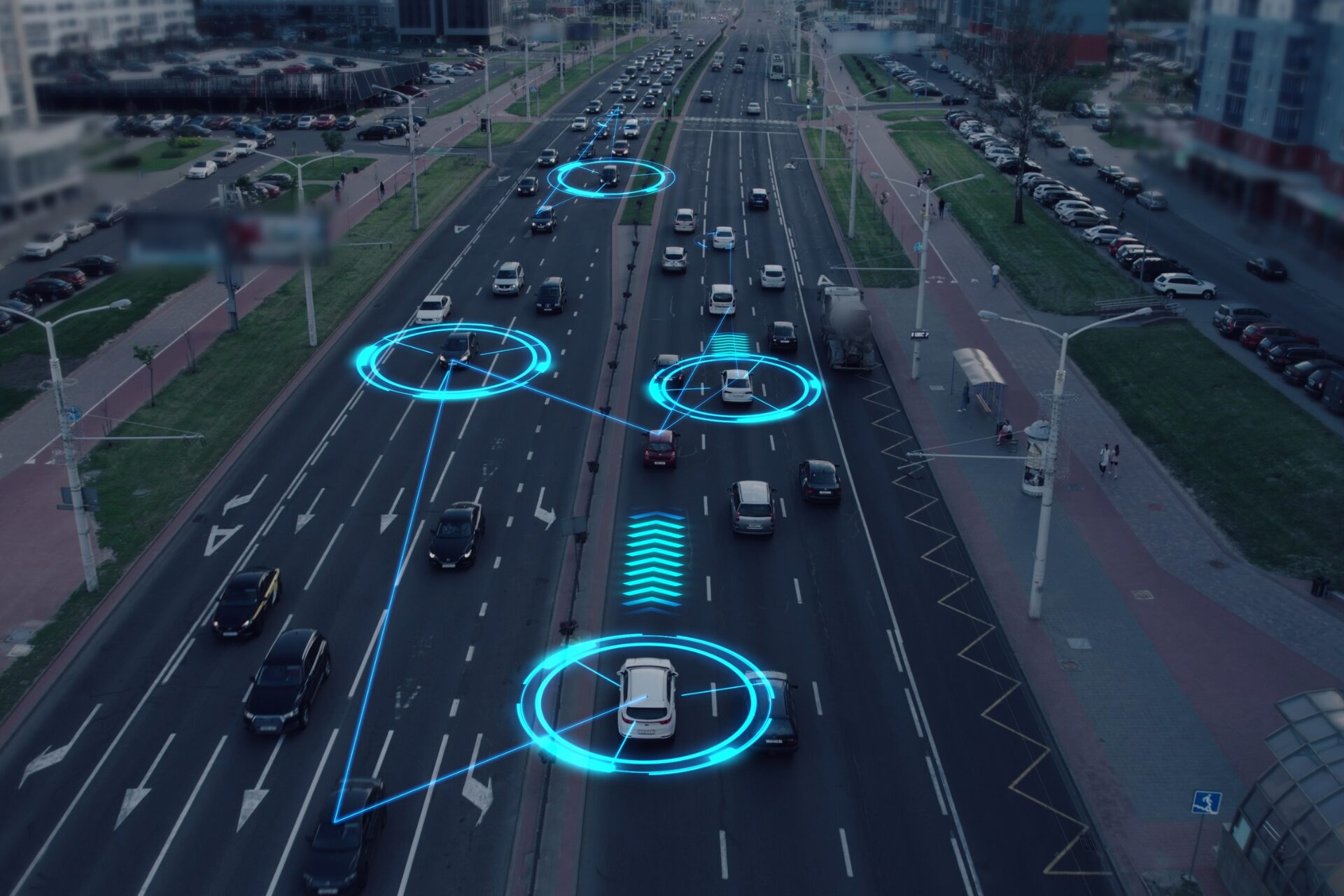
A modern smart city traffic management system functions as the brain of the road network. Rather than relying on static plans or outdated hardware, these systems use real-time data to deliver actionable insights to communities.
This approach empowers city officials and transportation professionals to make changes based on what is actually happening on their streets, rather than on assumptions.
The primary goal of smart city traffic optimization is to transform raw data into mobility solutions that solve real-world challenges. Whether it’s identifying a dangerous intersection or shortening a commute, the focus is always on improving travel for every road user.
Integrating ATMS and Smart City Platforms
Advanced Traffic Management Systems (ATMS) serve as the data-driven “central nervous system” of urban mobility, using a network of IoT sensors, AI analytics, and real-time communication to dynamically optimize vehicle flow.
Unlike legacy systems that rely on static timers, ATMS provides the critical infrastructure for broader smart city initiatives by enabling seamless interoperability between traffic signals, emergency services, and public transit.
By integrating these systems, cities can automate “green corridors” for first responders and provide real-time data to connected vehicles, transforming isolated traffic control into a responsive, city-wide utility that reduces both congestion and carbon emissions.
How does ATMS integration help improve traffic flow?
In the past, traffic data often sat in silos, accessible only to a few engineers. Today, the Miovision One platform brings key tools into one place, making data collection and analysis simpler.
This setup supports a “Mio One” app approach that lets tools work together rather than in isolation. These tools include intersection monitoring, performance metrics, and mobility reports. Together, they help manage traffic flow across the city.
When traffic management is integrated with a city’s wider digital infrastructure:
- Data transparency is enhanced, giving clients control over their information.
- Interdepartmental collaboration between city planners and traffic managers improves.
- Future-proof technologies ensure long-term benefits and adaptability to new advancements in urban mobility.
The Power of Real-Time Data Analysis
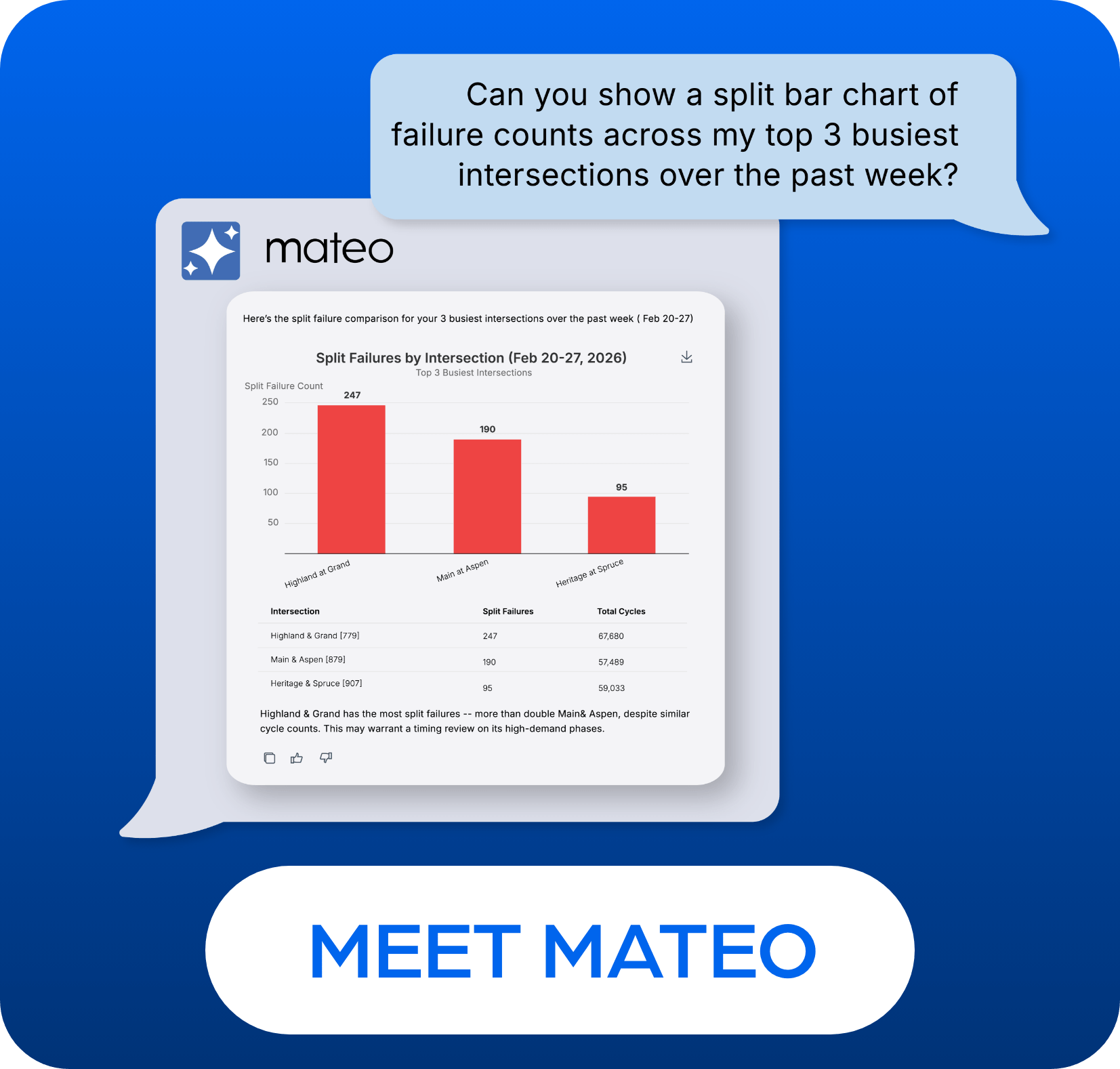
Effective city traffic management requires more than just hardware: it requires sophisticated data analytics. By analyzing real-time data, a smart traffic management system can identify bottlenecks as they form. Traffic signal timing can then be dynamically adjusted to improve traffic flow.
Densely populated urban areas especially benefit from this level of real-time traffic monitoring. It reduces traffic congestion, improves transit operations, and maintains traffic efficiency, enhancing the quality of life.
V2X: Connecting Traffic Systems and Autonomous Vehicles
One of the most exciting frontiers in traffic management for smart cities is Vehicle-to-Everything (V2X) communication.
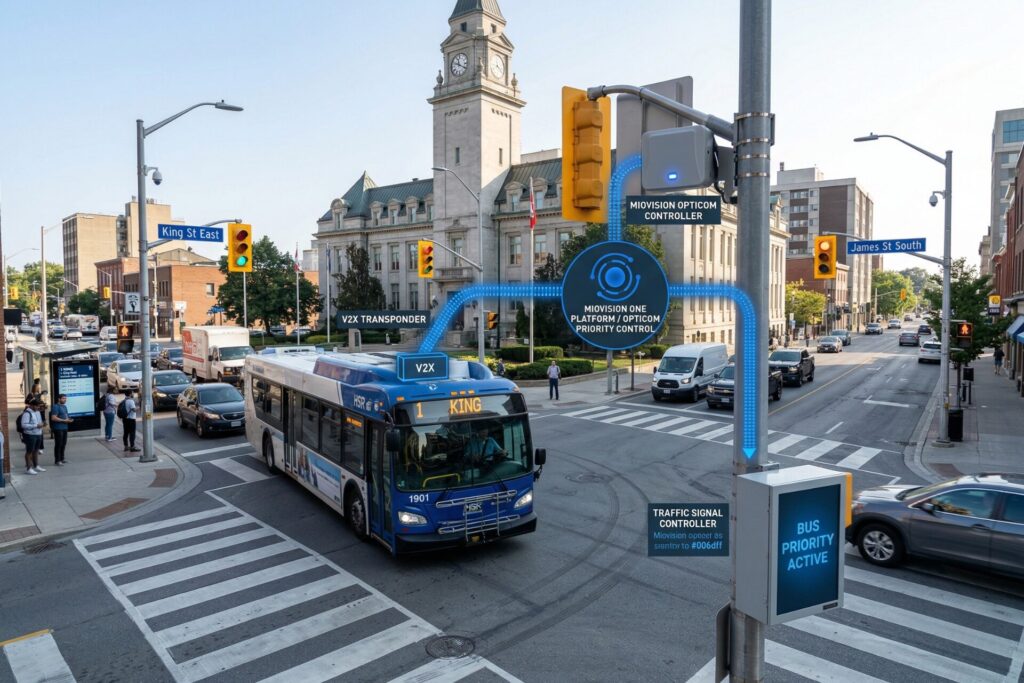
This technology enables vehicles to communicate with the infrastructure around them, such as traffic lights and sensors. As such, Miovision Opticom is a prime example of how this connectivity enhances mobility.
By using a flexible priority control platform, cities can effectively prioritize specific vehicles at intersections, such as ambulances.
Priority Control and Emergency Vehicles
Emergency Vehicle Preemption (EVP) uses sensors in traffic signals to detect police cars and ambulances. When the system detects an emergency vehicle, it gives a green light, helping first responders arrive faster and with less risk.
This technology has supported road safety for almost 60 years, reducing delays at intersections and supporting quick responses to urgent calls.
Improving Public Transit and Transit Signal Priority
Similar to EVP, Transit Signal Priority (TSP) is used for city buses and other transit vehicles. By optimizing routes through TSP, cities can reduce congestion and make public transportation a more reliable, attractive option for residents.
This directly supports sustainability goals by encouraging higher transit ridership, lowering overall emissions, and stabilizing bus and train schedules.
Smart Traffic Solutions for Pedestrian Safety
A truly smart city doesn’t just prioritize cars; it prioritizes people. That’s why smart traffic management must account for the most vulnerable road users: pedestrians and cyclists.
Smart cities prioritize people by using AI sensors to dynamically extend “walk” signals, optimize traffic flow to reduce street-level emissions, and provide digital accessibility tools for safer navigation.
This shifts the focus from vehicle throughput to human safety and urban livability.
Optimizing Cycling Infrastructure in Smart Cities
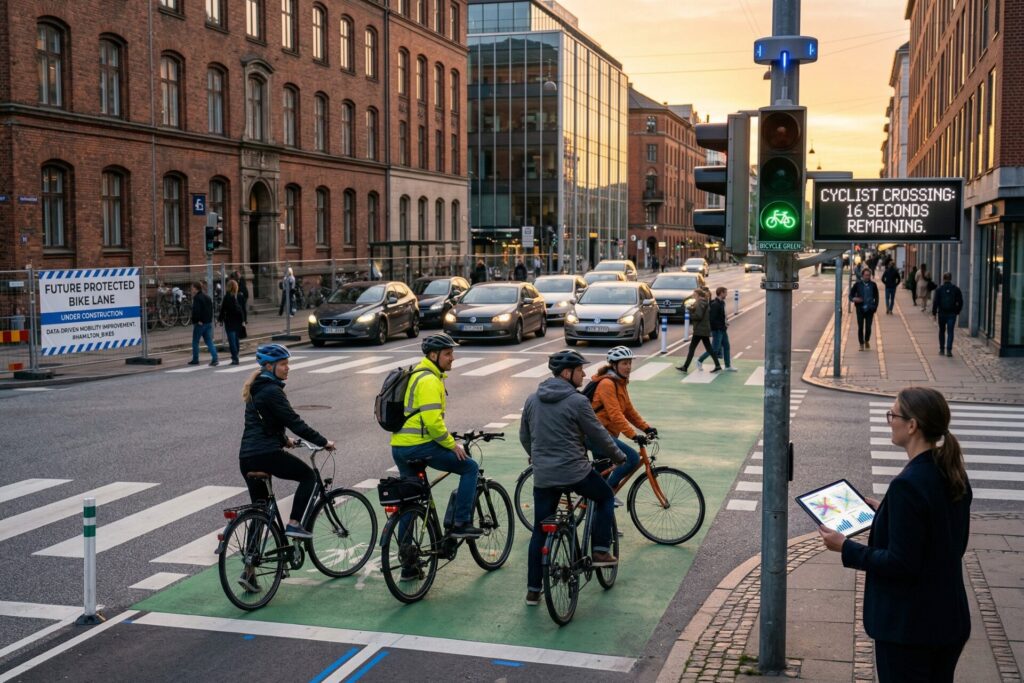
As more people choose bicycles for their daily commutes, cities must adapt their road infrastructure. Smart traffic lights can be programmed to detect cyclists at intersections, ensuring they’re given enough time to cross safely.
Additionally, analyzing cycling trends in mobility reports can help city planners make data-driven decisions about where to install new bike lanes or protected paths, among a few.
This holistic approach to road optimization ensures that the benefits of smart technology are felt by everyone, regardless of their mode of transport.
Reducing Traffic Congestion through Machine Learning
The future of smart traffic systems depends on machine learning and predictive analytics. These tools study historical data to predict patterns before they happen.
If, for example, traffic often peaks at 4:30 p.m. on Fridays, a smart system can spot this trend and act early by adjusting signal timing before the rush begins. This helps reduce delays and improve traffic flow.
When smart systems use machine learning, they become proactive rather than reactive. This helps reroute traffic and provide alternative routes to drivers via smart transportation systems, ultimately creating smoother traffic flow and reducing the frustration of traffic jams.
Lowering Air Pollution with Better Traffic Flow
Sustainability is a key pillar of smart city initiatives. Frequent idling at traffic lights contributes significantly to air pollution in cities. By optimizing traffic light timings, a smart city traffic management system can minimize the number of stops a vehicle makes.
This improvement in traffic flow leads to:
- Lower fuel consumption for drivers
- A reduction in greenhouse gas emissions
- Progress toward creating green cities and livable urban environments
FAQs About Real-Time Traffic Monitoring and Control
How does a smart city traffic management system improve safety?
It uses real-time traffic monitoring and predictive analytics to reduce traffic accidents. Systems like Miovision Scout Plus provide data for crosswalk safety and cycling infrastructure to protect vulnerable road users.
Can smart traffic lights reduce city traffic congestion?
Yes. By adjusting traffic signal timing based on sensor data, cities can optimize traffic flow and reduce traffic delays. This helps manage traffic flow efficiently, especially during peak periods in urban areas.
What role does V2X play in smart cities?
V2X connects traffic lights with vehicles. Technologies like Miovision Opticom use this for emergency vehicle preemption and transit signal priority, ensuring faster emergency responses and better public transportation reliability.
How does smart technology support urban sustainability?
Smart traffic solutions reduce vehicle idling and help optimize routes. This results in lower emissions, helps build greener, more sustainable cities, and improves the overall urban transportation network.
Transforming Urban Transportation for the Future
The transition to smart transportation systems is an ongoing journey rather than a single destination. It requires a commitment to innovation and a willingness to embrace new technologies, such as autonomous vehicles and cellular connectivity.
For government officials and transportation professionals, the opportunity lies in gaining the data needed to improve road networks in the long term.
Here’s where Miovision can help. We’re dedicated to creating smart traffic management systems that build these smart cities. Our data-driven approach leverages cutting-edge technology to ensure that accurate, real-time data supports every decision made at the intersection level.
Effective urban management starts with understanding how your city moves. When we empower policymakers with the right information, every city can become safer, greener, and more efficient.