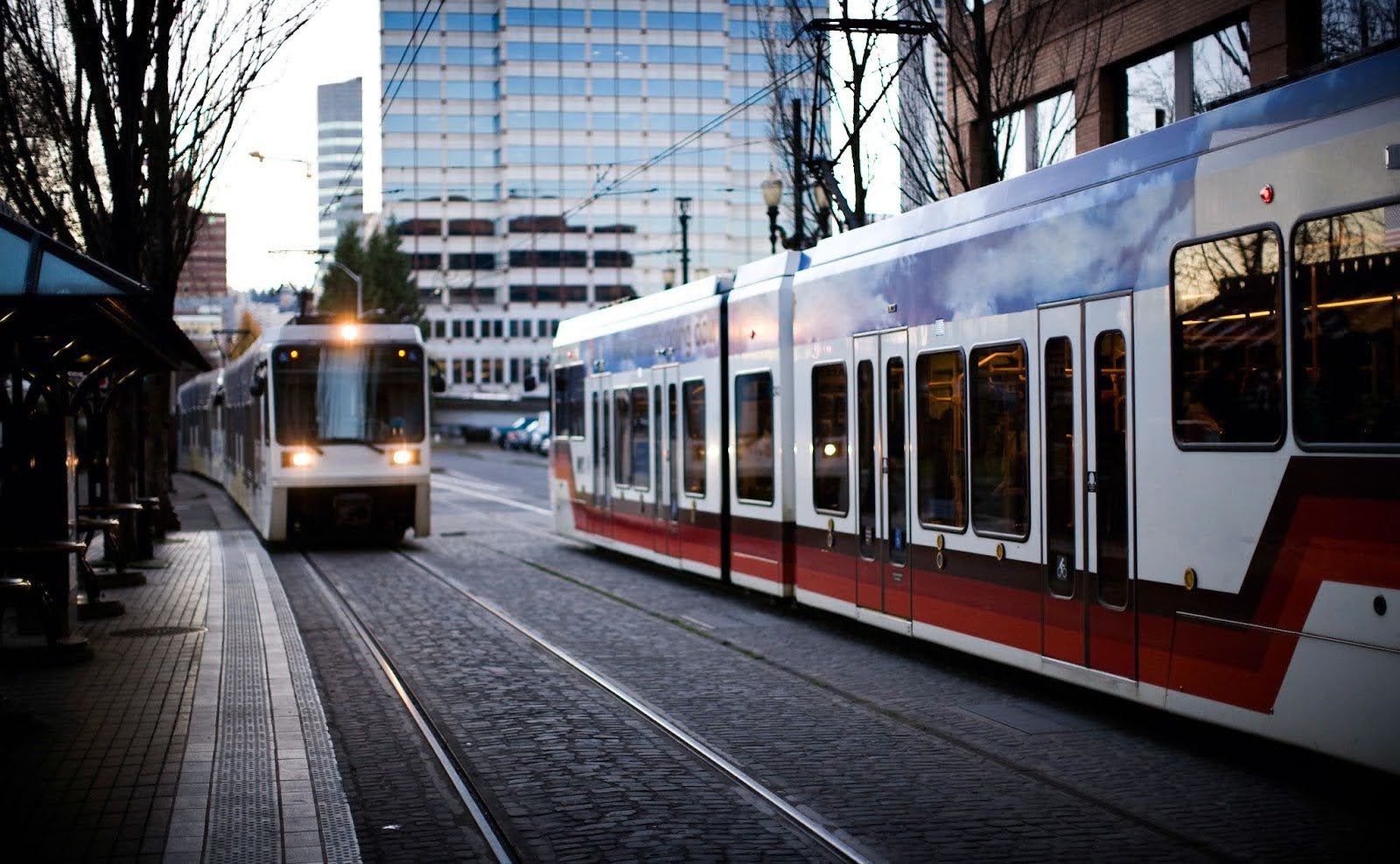
Transit Signal Priority (TSP) is gaining widespread adoption throughout cities to help keep transit safe, reliable, and efficient. As cities continue to grow, bringing with it increased congestion and traffic delays, many riders are looking to rely on transit to get them where they need to be, safely, and on time. Miovision Opticom TSP can help make that happen by improving schedule adherence, giving back hours of commute time to riders, and helping agencies run vehicles efficiently, resulting in fuel and maintenance savings.
Read on to learn more about what TSP is, how it works, and how agencies are implementing TSP with existing onboard tools to give back 3+ hours a week to commuters.
What is Transit Signal Priority?
Transit Signal Priority (TSP) facilitates priority control at intersections to help transit stay on schedule and maintain a reliable transit service. This means that buses and streetcars can communicate with traffic signals and intersections, asking it to hold a green light or shortening a red light to stay on schedule.
With Opticom TSP, cities and transit agencies can set a number of conditions that the intersection must consider before granting the green light, allowing for minimal disruption to traffic planning and signal timing. It’s a win-win for riders, transit agencies, and municipalities.
Why TSP is important
This simple act of communicating to intersections helps keep transit moving smoothly, reducing delays and making public transportation a more reliable choice for everyone.
Consider these scenarios which can significantly throw a bus off its schedule:
- A traffic collision causes an unplanned road closure on a busy route
- The morning rush hour is extra congested
- Inclement weather has backed roadways, or caused congestion
Passengers are delayed, and riders on subsequent stops are left waiting, with more people joining the bus queue in anticipation of the next scheduled bus. Riders are late to any appointments and bus drivers are at the mercy of traffic. When the delayed bus finally arrives, the bus is packed, riders and drivers are equally frustrated, eroding trust in the service.
There may be further risk to operations from a staffing perspective: Studies on BRT drivers have shown that bus drivers tend to report higher levels of occupational stress and burnout, which is often associated with turnover and retention.
TSP can help reduce impact of unforeseen delays and heavily trafficked routes. If the bus is significantly delayed and off-schedule, TSP equipped buses can request extended green lights, reducing signal delays and spending less time waiting at red lights. This allows the bus to make incremental gains in travel time, reducing travel time, and get to waiting riders quicker, positively impacting driver satisfaction and a reduction in turnover.
It can also help transit vehicles run efficiently, reducing emissions and impacting fuel savings. By spending less time idling at red lights, or reducing travel time, less fuel is wasted, allowing for improved cash flow and maximizing budgets.
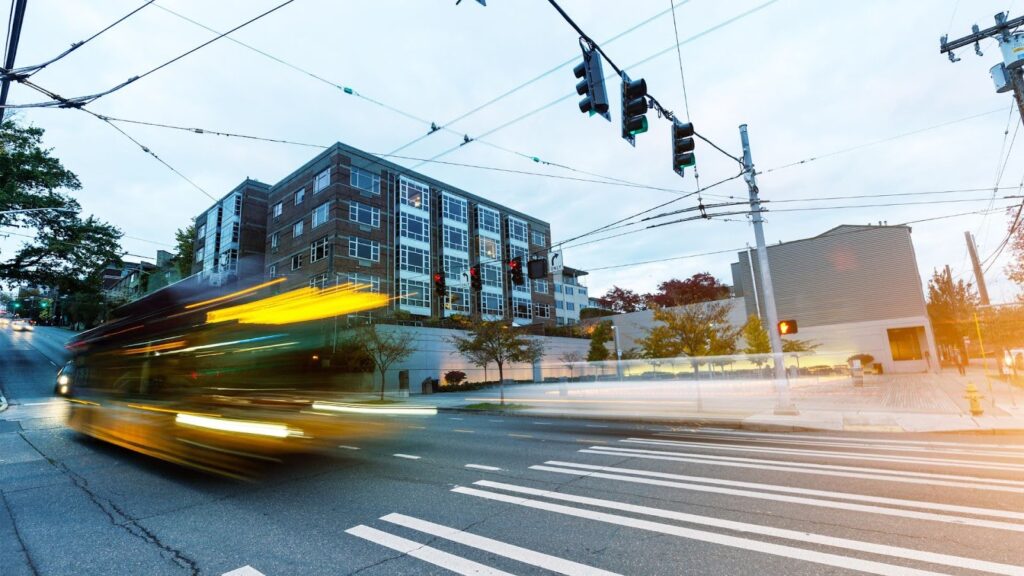
How agencies can implement TSP
Opticom has been providing TSP for over 20 years, and it’s easier to implement than agencies think. The technology has come a long way from hardware-heavy implementation that required infrared or GPS units mounted at intersections and in vehicles.
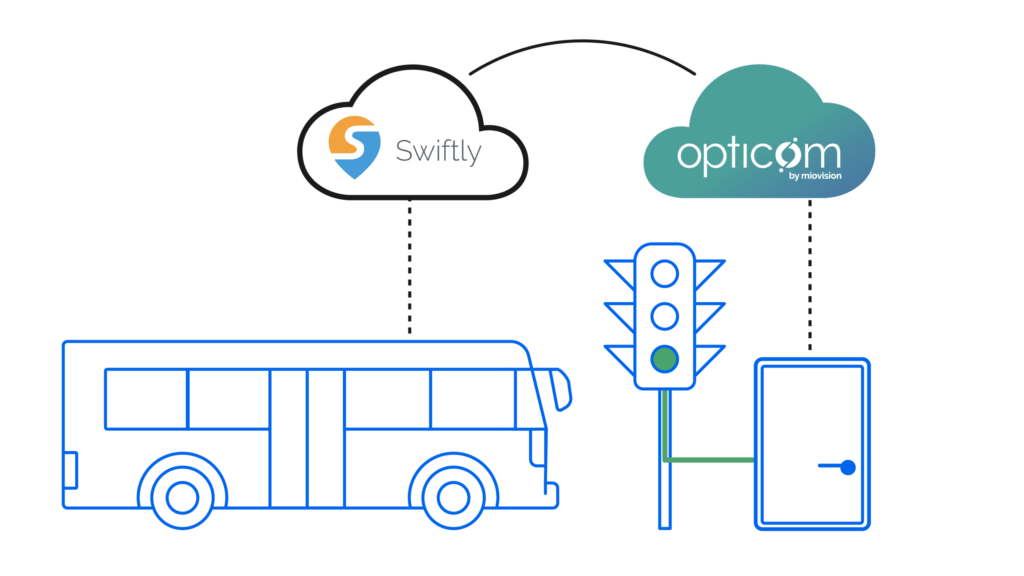
There are several ways to implement TSP, especially as more intersections come online with smart signal upgrades and cloud-connected capabilities. Opticom easily integrates with this modern infrastructure. With enhanced connectivity, agencies can deploy cloud-based systems that leverage existing onboard hardware and integrated software applications to receive vehicle information, determine priority, and communicate directly with smart intersections equipped with Opticom technology.
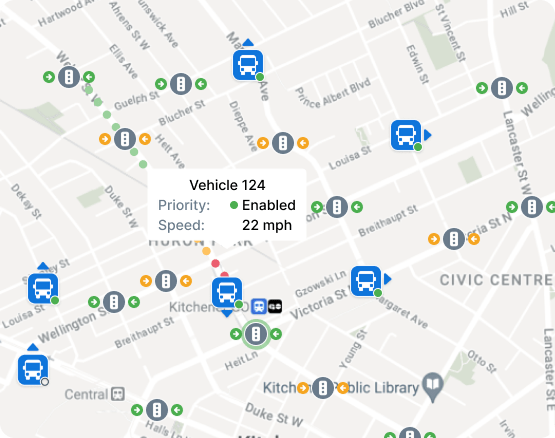
On-board hardware and software compatible with Opticom includes Cradlepoint and Semtech modems, and Swiftly, which tracks real-time vehicle locations, route information, speed, heading and more. This kind of information is vital to communicate to intersections, who then review against specified criteria to grant the green light.
Case Study: How RABA Achieved a 15% Travel Time Reduction with Opticom TSP
The City of Redding was seeing fluctuating populations and increased traffic congestion. Maintaining reliable public transit was increasingly a challenge during peak traffic hours, resulting in delays for buses on main transit corridors. The Redding Area Bus Authority (RABA) was looking for solutions.
RABA also had specific requirements: they needed a system that would use their existing Swiftly GTFS-RT data, and the community was looking for sustainable transit that reduced idling times and emissions.
RABA decided on using Opticom TSP, which could easily integrate with Swiftly’s APIs. Because they had most of what was needed to get started quickly, and were well connected with other municipal agencies (such as Traffic Departments and maintenance teams), their Opticom system was deployed in 2 days.
Using onboard technology, and Opticom’s conditional priority, RABA was able to prioritize buses on Route 4 if they were one minute or more behind schedule. Using Opticom, RABA saw that the average travel time per trip was reduced by 15% during peak hours. This was a significant improvement, and resulted in 3.5 hours saved monthly for commuters.
Read the detailed case study, and see how RABA used the Swiftly Vehicle API with Opticom →
Getting more than green lights
Opticom’s TSP solution goes beyond simply changing a light. It provides agencies with monitoring tools and performance data, helping them make data-driven decisions to optimize their operations. With analytics tools, customers are able to drill down on performance factors such as signal delay, dwell time, drive and travel time, and understand where to implement route, schedule or TSP improvements to create a better experience for all.
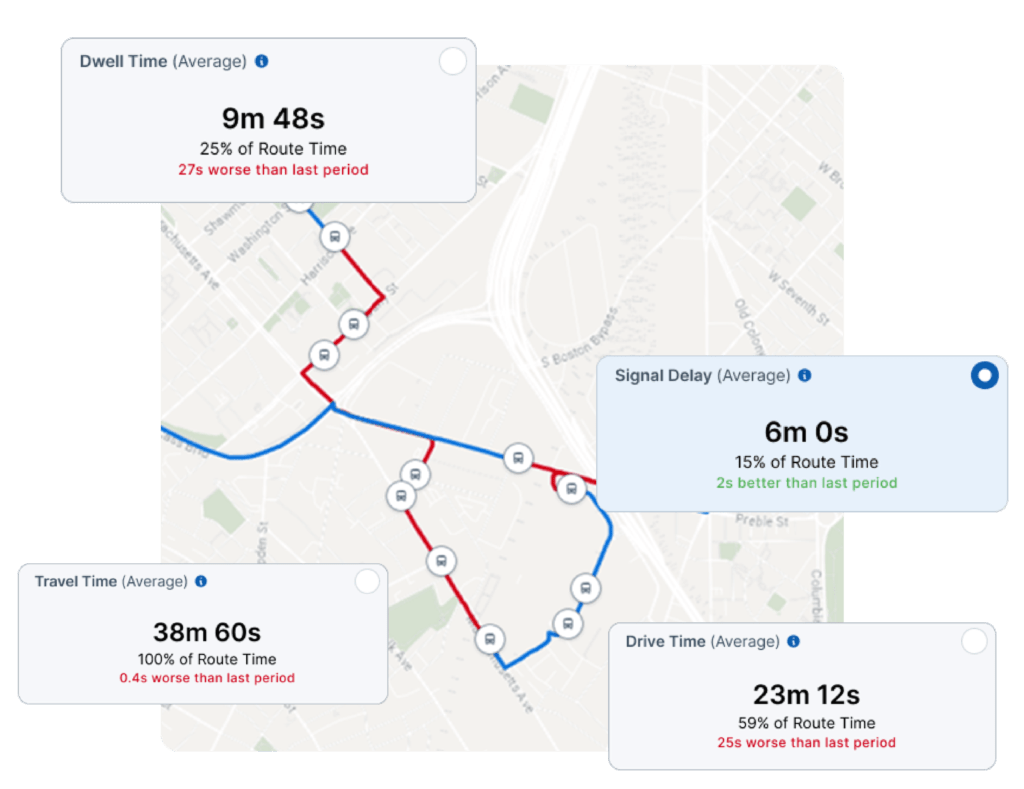
The system is also designed to minimize disruption to existing traffic flow by only granting priority to transit vehicles that need it. With Miovision Opticom TSP, agencies can maintain schedule adherence even during peak traffic and work toward a future with more dependable public transit.
Miovision Opticom’s Transit Signal Priority (TSP) helps transit vehicles navigate city streets with fewer delays. TSP boosts passenger satisfaction by indirectly reducing waiting times and, when paired with Dynamic Passenger Information, provides real-time arrival updates that make waits more tolerable and improve overall service perception. Beyond individual trips, TSP supports system-wide benefits by encouraging ridership, reducing congestion and emissions, and advancing equitable mobility by improving access and connectivity for communities that depend most on transit.