

Key Takeaways
- The first traffic light was a gas-powered signal in 1868, while the first electric traffic light debuted in 1914.
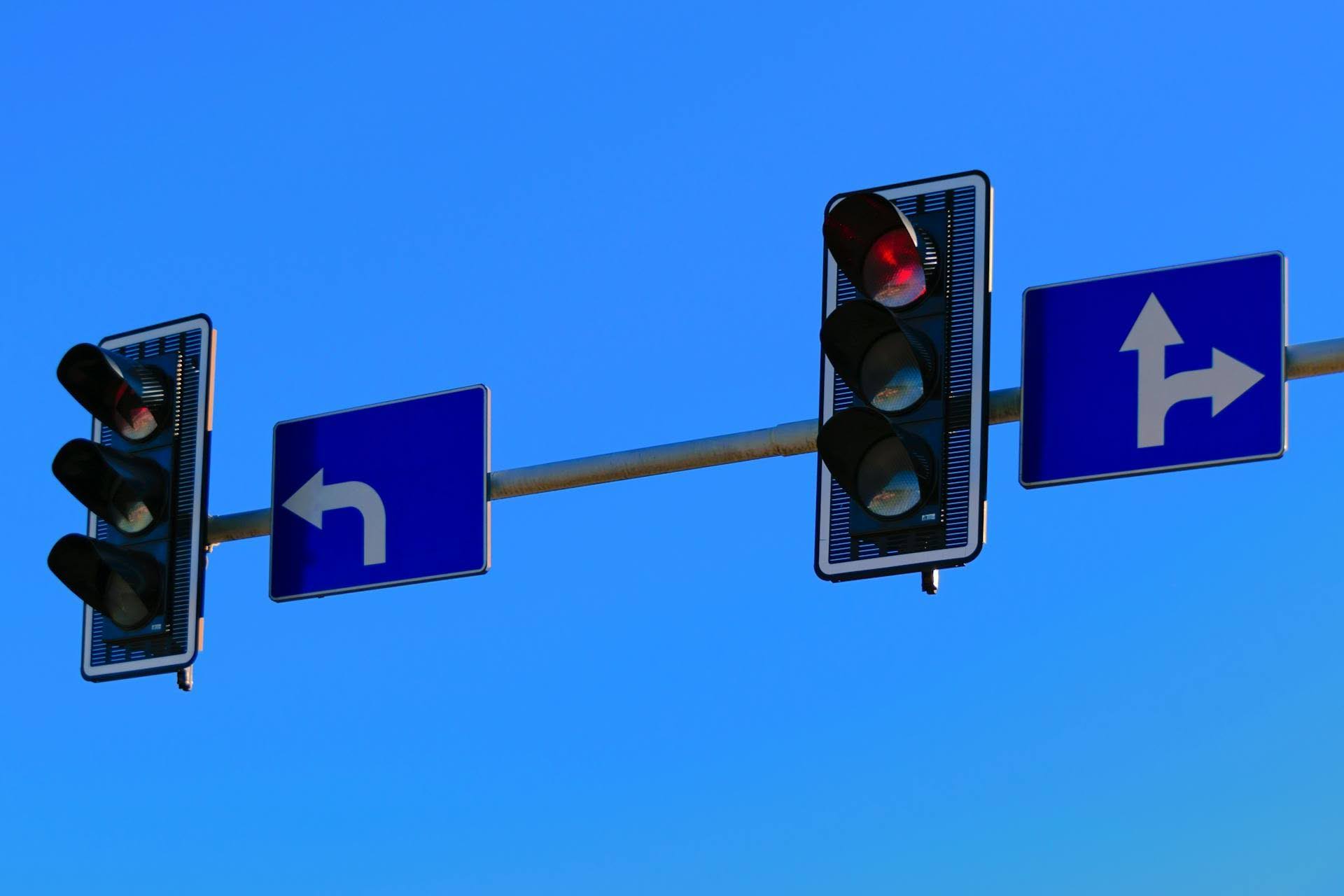
- The evolution of the traffic light was driven by the need to protect police officers and manage the rise of motor vehicles.
- Modern traffic management technology uses traffic sensors on traffic lights to make real-time decisions.
- Next-generation traffic lights may include a fourth "white" light to accommodate autonomous vehicles (AVs).
- Miovision provides the adaptive traffic systems necessary for smart mobility and Vision Zero goals.
Explore the evolution of the traffic light from gas lamps to AI. Our deep dive into traffic light history covers how smart traffic signals and adaptive traffic systems use modern traffic management technology to improve safety.
When you stand at a bustling city intersection, you’re witnessing a sophisticated dance of data. As cities expand, traffic light systems must evolve to enhance traffic flow, improve pedestrian safety, and facilitate sustainable transportation.
Looking back through road history, how did we get from explosive gas signals to the next-generation traffic lights we use today?
When Were Traffic Lights Invented?
Traffic lights were first invented in the 1860s with the introduction of gas-powered models in London. Electric lights followed in the 1900s in the US.
Here is a short timeline of key firsts in traffic light history:
- 1868: The world’s first traffic light was installed in London.
- 1912 to 1914: The electric traffic light was invented and first installed in Salt Lake City and Cleveland.
- 1920: The first four-way, three-color traffic signal was created by William Potts in Detroit.
- 1923: Garrett Morgan patented the three-position traffic signal, introducing the caution interval.
- 1950s to 1960s: This is when traffic lights became common across major global urban centers.
A Brief History of Traffic Lights
The first traffic light appeared in 1868 outside the British Houses of Parliament. Designed by J.P. Knight, a British railway engineer, it used semaphore arms and gas lamps. Unfortunately, a gas leak caused an explosion that injured the operating officer, halting traffic light innovation for several decades.
In 1912, Lester Wire in Salt Lake City built an early model of the electric traffic light. However, it wasn’t until two years later that one would be installed.
The first officially installed electric traffic light was in Cleveland, Ohio, in 1914. A police officer still ran it from a booth, but it helped start the shift toward modern traffic control systems.
In 1923, inventor Garrett Morgan patented a three-position traffic signal, improving road safety. Before this, the lights switched from red to green without warning, leaving little time for vehicles to clear the intersection. Morgan later sold the patent to General Electric for $40,000, making the three-color traffic light a global standard.
How Do Traffic Lights Know When to Change?
Many people wonder whether traffic lights are on timers or automatic. The answer depends on the age of the infrastructure.
Fixed-Time Signals
Older systems often run on a signal timing schedule. These traffic lights are on timers and change based on the time of day, regardless of actual traffic volume.
Traffic Sensors on Traffic Lights
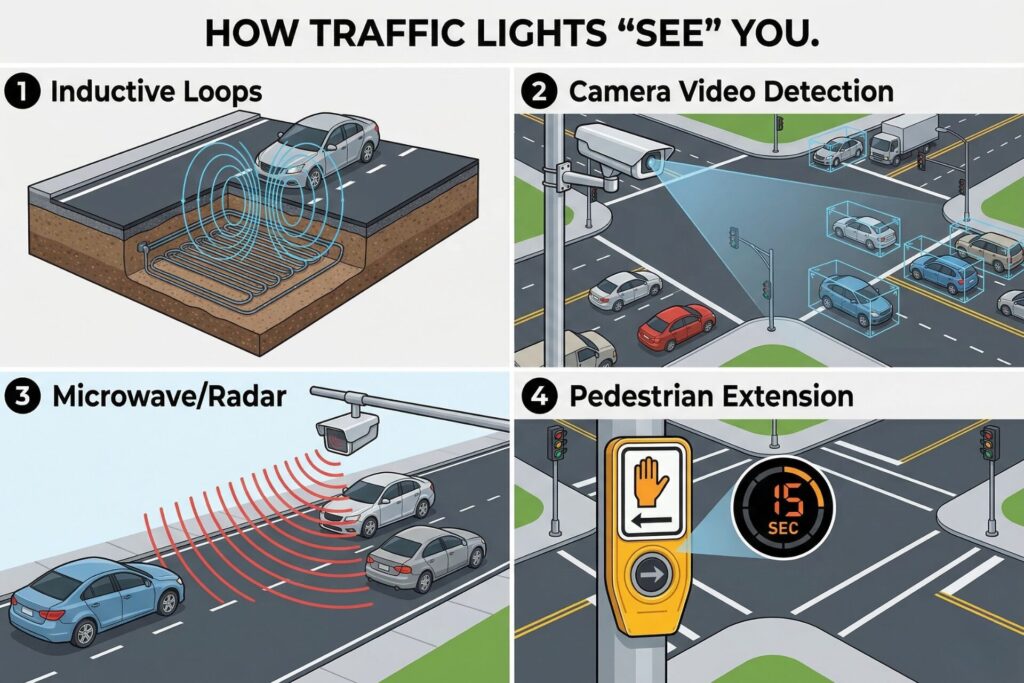
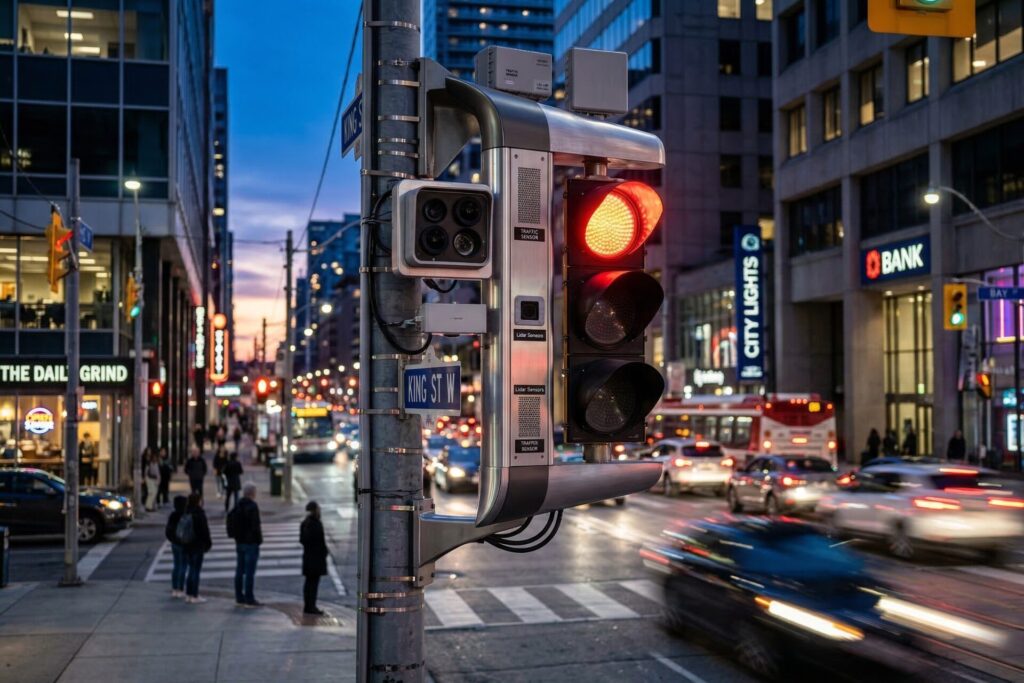
Modern intersections use traffic sensors on traffic lights to detect vehicles. There are several ways that makes traffic lights change:
- Inductive loops: These are wires buried in the road that detect the metal in a vehicle.
- Video detection: Cameras, like those in the Miovision Scout Plus, monitor traffic and use algorithms to trigger light changes.
- Microwave/Radar: These sensors detect motion and are effective in various weather conditions.
Adaptive Signal Control
Adaptive traffic systems are the most advanced. These smart traffic signals use real-time data to adjust green lights and red lights on the fly, reducing congestion and improving traffic flow.
Understanding the Difference: ATC vs. VAC Traffic Signals
When discussing modern traffic lights, engineers often distinguish between Adaptive Traffic Control (ATC) and Vehicle Actuated Control (VAC).
- Vehicle Actuated Control (VAC): This is a basic form of traffic control in which traffic signals change in response to simple triggers, such as a car entering an inductive loop. While more efficient than a fixed timer, VAC is local to a single intersection and does not account for the traffic flow of the surrounding network.
- Adaptive Traffic Control (ATC): These are the adaptive traffic systems used by Miovision. ATC looks at the entire corridor or city grid as a single unit. It uses smart traffic signals to coordinate “green waves” across multiple connected intersections, ensuring traffic moves smoothly without the “stop-and-go” patterns common in older traffic systems.
How Traffic Lights Impact Urban Infrastructure
Beyond controlling traffic flows, modern traffic lights impact complete streets, shaping how cities move, grow, and adapt.
How Do Traffic Lights Contribute to Sustainable Urban Planning?
Traffic lights play a big role in making cities cleaner, more efficient, and easier to get around. By cutting unnecessary stops and starts, they help save fuel and reduce emissions, both of which are important for building sustainable cities.
Ever heard of “green waves?” These coordinated timing systems let cars cruise through intersections without stopping, reducing idling and wear and tear on roads and vehicles.
With the implementation of complete streets initiatives and climate action plans, traffic lights are now being reprogrammed to serve more than just cars. Prioritized signals for public transit, bicycles, and pedestrian crossings help shift urban travel habits toward greener modes of transportation.
These systems:
|
How Do Smart Traffic Lights Improve Safety?
Smart traffic lights are changing the game when it comes to road safety. Instead of using fixed timers like traditional signals, these systems use sensors, cameras, and AI to monitor traffic in real time. They adjust light cycles on the spot based on traffic flow, speed, and even pedestrian counts.
The result? Shorter wait times and fewer chances for risky moves like running red lights.
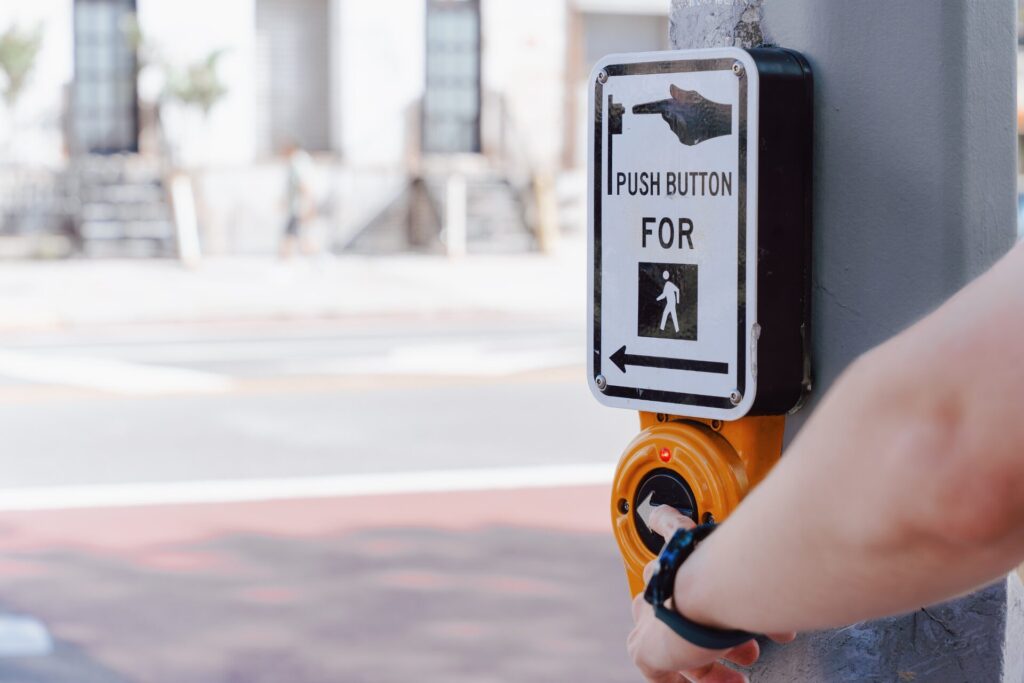
These systems provide greater protection for pedestrians and cyclists. Countdown timers, longer crossing times, and audible alerts improve visibility and reduce conflicts between road users.
Some cities also use smart lights to respond to weather conditions or special events, ensuring all movement is detected and intersections remain safe even when roads are busier or more hazardous than usual.
Miovision’s Video Detection system can also improve pedestrian safety by offering Pedestrian Extensions, which extend the pedestrian signal to give people more time to cross the street safely. It’s especially helpful to the elderly or people with limited mobility who may need extra time crossing.
How is AI Used in Traffic Management?
Artificial Intelligence (AI) is the “brain” behind modern traffic signal systems, including traffic lights. In traffic management, AI primarily processes massive amounts of real-time data to make split-second decisions at intersections.
For example, computer vision algorithms can distinguish between a car, a cyclist, and a pedestrian, allowing the traffic signal technology to prioritize the most vulnerable road users.
AI also excels at pattern recognition. By analyzing historical data, AI can predict when a busy intersection will experience a surge in traffic and proactively adjust the signal timing to prevent gridlock before it starts.
This shift from reactive to predictive traffic control is a hallmark of a true Smart City. By using AI to optimize traffic lights, municipalities can reduce congestion and create a more sustainable urban environment.
What Are the Disadvantages of Smart Traffic Lights?
While smart traffic signals offer transformative benefits, they do come with certain challenges. One is the initial cost of infrastructure upgrades.
- Transitioning from legacy traffic light systems to adaptive traffic systems requires investment in traffic sensors at traffic lights, high-speed communication networks, and centralized software such as Miovision One.
- Maintenance is also more complex than traditional timers, as next-generation traffic lights rely on a network of cameras and sensors.
- Additionally, as these systems become more connected, cybersecurity becomes a priority to ensure traffic management technology remains secure.
How Miovision Addresses These Challenges
The Miovision One platform is specifically designed to minimize these hurdles through scalability, remote connectivity, and centralized management.
Overcoming Cost with Scalability
Miovision offers a scalable, open platform. Municipalities can start with a single busy intersection or use Miovision Scout Plus for temporary studies before committing to permanent infrastructure.
This flexible approach allows cities to realize the benefits of traffic management technology without an overwhelming initial budget.
Reducing Maintenance Through Remote Access
To address maintenance complexity, Miovision provides engineers with remote access to signal operations. The Miovision One portal enables cloud-based diagnostics and fine-tuning, ensuring traffic signals remain optimized and reducing long-term operational costs often associated with next-generation traffic lights.
Prioritizing Security
Miovision treats cybersecurity as a core priority. By consolidating traffic sensors, data collection, and signal control under the unified Miovision One platform, the brand provides a secure, centralized environment for city data.
Next-Generation Traffic Lights To Look Forward To
We’re entering a new era of innovative traffic lights. As connected vehicles and autonomous technology become standard, future traffic lights must adapt.
The White Light Concept
One major traffic light innovation currently being tested is a new color for US traffic lights: white. This fourth light would signal to human drivers to follow the autonomous vehicles ahead, helping control traffic more efficiently during the transition to self-driving cars.
LED and V2X Technology
Most modern traffic lights have switched to LED for better visibility and energy efficiency.
Furthermore, next-generation traffic lights are using V2X (vehicle-to-everything) communication. This allows traffic signals to communicate directly with cars, notifying them of an approaching red light or providing optimal green-light speed advice to reduce idling.
Learn more: How V2X Communication Improves Road Safety
How Miovision is Shaping the Future
How has Miovision revolutionized traffic management technology? By moving away from “dumb” timers and toward the Miovision One platform. This platform provides cities with the data they need to build “Smart Cities” that prioritize both road safety and sustainability.
Miovision Opticom technology also provides Emergency Vehicle Preemption (EVP), allowing fire trucks and ambulances to reach scenes faster by ensuring they receive green signals as they approach.
It’s a critical part of modern intersection management that puts smart cities one step ahead of meeting Vision Zero goals.
FAQs About Traffic Light Systems
How did the introduction of yellow lights change traffic control?
The yellow or amber light created a “clearance interval.” This prevented the safety hazard of cars being caught in the middle of a busy intersection when the red light appeared, significantly reducing T-bone collisions.
How do countdown timers on traffic lights enhance public safety?
A countdown timer at pedestrian crossings removes uncertainty. It helps road users, including visually impaired pedestrians, know exactly how much time they have to cross safely, which reduces the likelihood of pedestrians being in the road when traffic begins to move.
How do smart traffic lights improve road safety and efficiency?
By using traffic sensors on traffic lights, smart traffic signals reduce unnecessary idling. This results in less congestion, fewer rear-end accidents, and a more predictable traffic flow.
How do traffic lights contribute to sustainable urban planning and traffic control?
By optimizing signal timing and creating “green waves,” cities can lower emissions from idling vehicles. Coordinated traffic systems also support public transit by giving buses priority, making public transport a more attractive and reliable option.
Matching Smart Cities with Smart Traffic Lights and Systems
The way we move is changing. From the first gas-lit signal in London to the AI-driven Miovision One platform of today, our goal remains the same: ensuring everyone gets where they’re going safely and efficiently.
Miovision continues to lead the way in modern traffic management. Explore our adaptive traffic systems and discover how your city can benefit from smarter, safer, and more efficient signal control.